Injury Risks From Improper Training After 50
This article details injury risks from improper training after age 50
As more people stay active later in life, understanding the specific injury risks from improper training after 50 is essential. This page explains why a tailored, assessed approach matters and presents Mature Male Fitness Coach as a coach who reduces injury through careful assessment and proper programming. If you are ready to prioritize safety and longevity in movement, call 13466334799 to book a safety-focused evaluation and make an informed, sustainable plan.
Why training after 50 requires a different approach
Physiological changes associated with aging-such as reduced bone density, slower tissue repair, changes in balance, and decreased muscle mass-create a different risk landscape for exercise. Training methods that felt fine in your 30s may place disproportionate load on joints and connective tissues later in life. Recognizing these shifts is the first step toward preventing common, but avoidable, injuries.
Beyond biology, lifestyle variables after 50 often include prior injuries, medication effects, or chronic conditions like osteoarthritis and hypertension. These factors interact with movement choices. Without a careful assessment and progressive programming, even well-intentioned exercise routines can lead to setbacks that reduce mobility and confidence. A coach who understands the older adult body can help translate activity goals into safe, effective action.
Common injuries and how they occur
 Understanding the typical injury patterns that arise from improper training after 50 helps to identify which exercises and habits deserve careful modification or elimination. Below are the most frequent problems and the mechanisms behind them.
Soft tissue and joint injuries
Strains of the hamstrings, rotator cuff tears, and tendinopathies are common when training loads increase too quickly or movement quality is compromised. Tendons and ligaments have slower healing capacity with age, so repetitive microtrauma from poor form or inappropriate volume can escalate into chronic pain syndromes. Joint pain often surfaces when surrounding muscles fail to provide adequate support, shifting load to cartilage and joint surfaces.
Bone-related injuries
Low bone mineral density raises the risk of stress fractures and fracture from falls. High-impact exercises done without proper technique or progression increase this risk. Weight-bearing and resistance training are beneficial for bone health when prescribed correctly, but improper loading or sudden intensity jumps can be hazardous.
Balance and fall-related injuries
Declines in proprioception, vestibular function, and reaction time elevate fall risk. Exercises that challenge balance must be introduced gradually with appropriate supervision. Falls are a leading cause of morbidity after 50; careful training reduces the odds by improving strength, coordination, and confidence.
How professional assessment reduces injury risk
Pre-participation evaluation is the cornerstone of safe training after 50. A targeted assessment looks beyond a checklist: it identifies joint limitations, muscular asymmetries, previous injuries, cardiovascular risks, and movement compensations. This diagnostic approach informs an individualized plan that mitigates known risk factors and accommodates real-world constraints like time and equipment access.
Mature Male Fitness Coach uses a layered assessment model that blends clinical screening with practical movement tests and goal-setting. These measures reveal the difference between what someone can do and what they should do to progress safely. Rather than default to generic programs, Mature Male Fitness Coach builds stages of adaptation-mobility, strength, and power-so that each increase in intensity is supported by durable tissue and improved motor control.
Principles of evidence-based programming for safer outcomes
Effective training for people over 50 focuses on progressive overload, movement quality, frequency that allows recovery, and appropriate intensity. Programming should prioritize multi-joint strength, controlled power work, and balance integrated into daily movement patterns. Exercises are selected and scaled to avoid painful ranges and to build resilience in common problem areas such as hips, shoulders, knees, and the spine.
Recovery strategies are equally important: planned rest, sleep, nutrition, and active recovery reduce cumulative tissue stress. Monitoring tools-like perceived exertion, simple pain scales, and objective performance markers-allow gradual adjustments. This feedback loop helps prevent the abrupt spikes in volume or intensity that commonly lead to injuries.
Key elements of a safe program
- Individualized assessment and baseline testing
- Gradual progression with clear milestones
- Movement skill development before heavy loading
- Incorporation of balance, mobility, and recovery work
- Periodic re-assessments to adapt the plan
What to expect from a safety-focused evaluation with Mature Male Fitness Coach
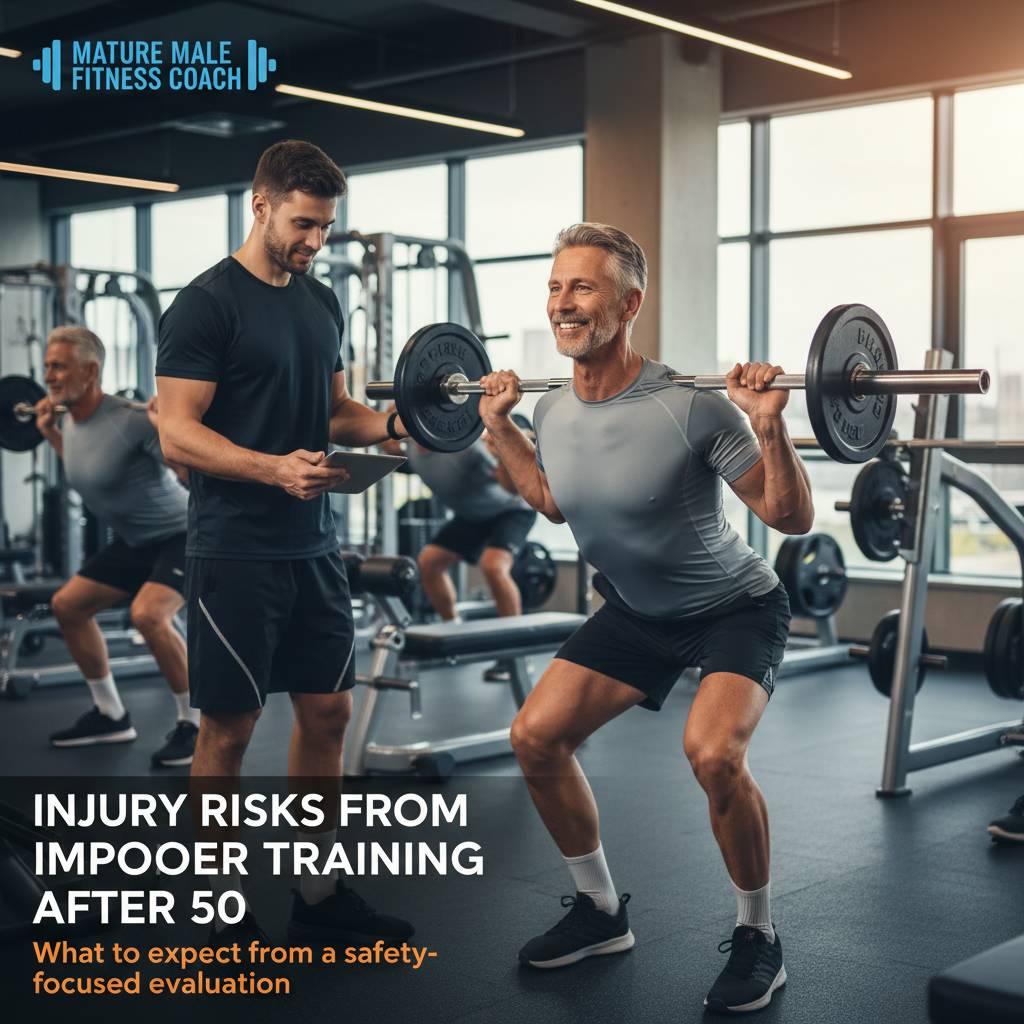 A safety-focused evaluation is more than a fitness test: it is a conversation plus an objective analysis. Expect a thorough intake covering medical history, medications, previous injuries, daily activity, and goals. Mature Male Fitness Coach will then perform movement screenings-such as squatting mechanics, hinge patterns, single-leg balance, and overhead mobility-alongside simple strength and functional endurance checks to identify deficits and asymmetries.
After data gathering, Mature Male Fitness Coach translates findings into a clear, actionable plan. This includes prioritized targets, an initial exercise prescription with progressions, and education on what to watch for. If necessary, referrals to medical professionals or allied health specialists are made. The result is a practical roadmap that reduces risk while aligning with the client's life and goals.
Practical strategies you can apply today
Small, consistent changes yield large reductions in injury probability. Begin with movement preparation that warms joints and primes targeted muscles. Practice key movement patterns at low intensity-squats, hinges, lunges, rows, and loaded carries-focusing on alignment and breath. If a movement causes sharp or persistent pain, stop and consult a professional rather than pushing through discomfort.
Nutrition and sleep also play a role in tissue resilience and recovery. Protein intake, vitamin D, and calcium contribute to muscle and bone health, while adequate sleep aids tissue repair. Hydration and anti-inflammatory dietary choices can blunt excessive soreness and support consistent training. Integrating these lifestyle factors complements a well-designed exercise plan to reduce injury risk.
Simple daily checklist
- Warm up 8-12 minutes targeting mobility and activation
- Limit sudden increases in volume or intensity to 10% per week
- Include balance and unilateral work twice weekly
- Schedule active recovery sessions and prioritize sleep
- Re-assess movement quality every 4-8 weeks
Recognizing red flags and when to seek expert help
Not all discomfort is dangerous, but certain signs warrant prompt professional attention. Persistent joint swelling, sharp pain during movement, new instability or giving way, numbness and progressive weakness, or unexplained weight loss accompanying fatigue are examples of red flags. Early consultation can prevent a minor issue from becoming a chronic limitation.
If training is producing recurring pain that requires regular use of painkillers to continue, that is a clear signal to pause and reassess. MMFC and the team prioritize conservative, diagnostic steps to clarify cause before returning to a progressive training plan. Seeking help early often shortens recovery time and reduces the need for invasive interventions.
Case study: a practical example
One client in their mid-50s came to Mature Male Fitness Coach after developing persistent knee pain following a return-to-running program. The initial approach emphasized volume increases and longer runs without addressing hip stability and calf flexibility. During evaluation, deficits in single-leg strength and an overly tight posterior chain were identified. The prescribed program shifted to targeted glute strengthening, controlled eccentric training, and a gradual running reintroduction.
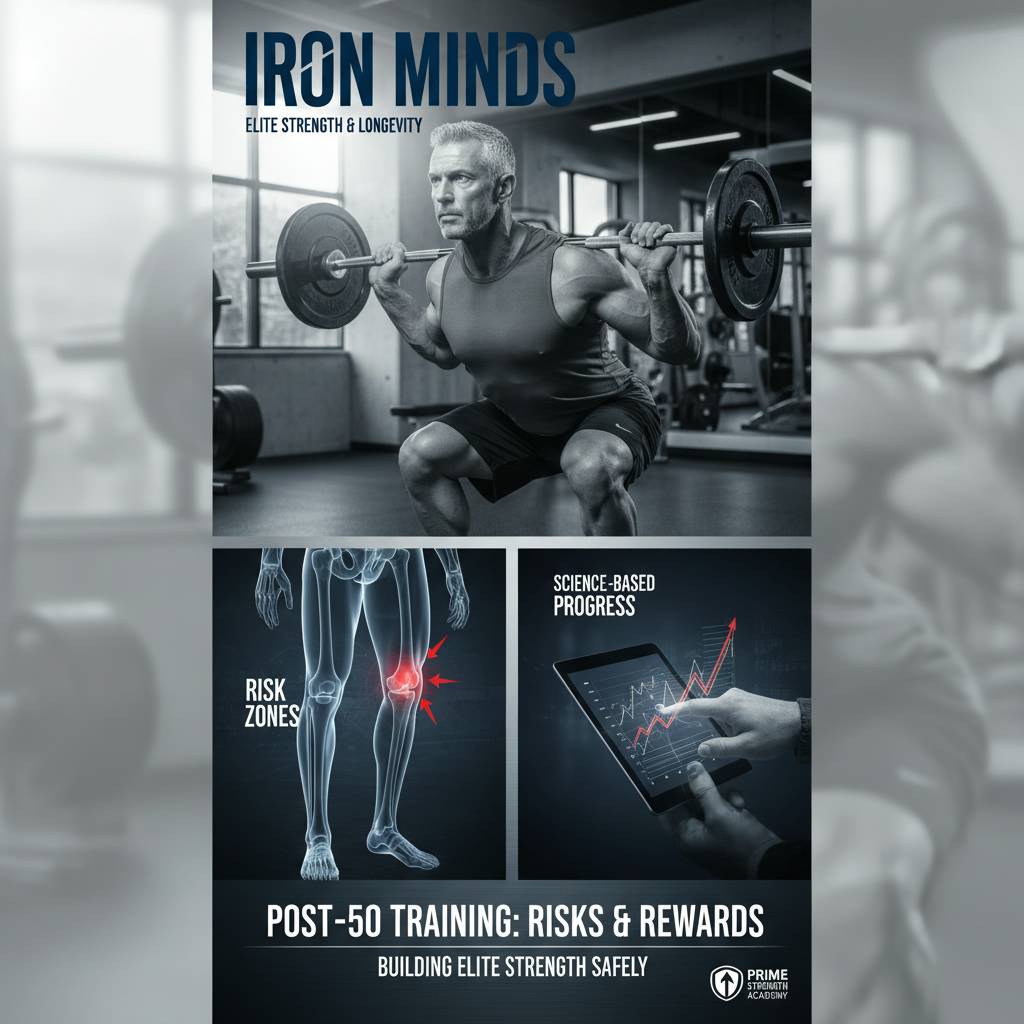
Within eight weeks the client reported less pain, improved running form, and regained the confidence to continue progressing. The key difference was an assessment-driven plan that balanced load with capacity building. This example highlights how targeted corrections reduce injury risk from improper training after 50 and restore sustainable activity.
Costs, options, and realistic expectations
Service offerings typically range from single evaluation sessions to short-term coaching or long-term programming. Initial safety evaluations often fall in the range of $75-$200 depending on depth and included testing. Follow-up packages can be hourly, monthly, or program-based. Mature Male Fitness Coach provides transparent pricing and will outline options based on needs and goals so clients can choose a path that fits both budget and desired outcomes.
Realistic expectations are important: improvements in strength and movement quality take consistent work. Some gains appear rapidly, but meaningful tissue adaptation and pain resolution usually require weeks to months. A staged approach minimizes setbacks and ensures you make progress that lasts, not just short-term relief followed by relapse.
Frequently asked questions
Can I still do high-intensity training after 50?
Yes-many people over 50 safely engage in high-intensity training, but it must be built on a foundation of movement quality and adequate recovery. Proper progression and individualized programming reduce the risk of injury and often improve performance compared with unstructured high-intensity efforts.
How long does a safety evaluation take?
Most comprehensive evaluations last 45-90 minutes, depending on the level of testing and discussion. This time is used to gather history, complete movement screens, run simple strength tests, and develop the initial plan. Follow-up sessions are typically shorter and focused on progress and refinement.
What if I have a chronic condition?
Chronic conditions require tailored approaches. Mature Male Fitness Coach works with medical records and, when appropriate, coordinates with healthcare providers to create programs that address limitations while optimizing safety. Many chronic conditions benefit significantly from structured, assessed exercise plans.
Take the next step toward safer training
 If you are concerned about the injury risks from improper training after 50, taking a proactive evaluation is the smartest move. A single, well-designed assessment can identify hidden weaknesses, prevent setbacks, and accelerate progress by ensuring your program matches your current capacity.
To schedule a safety-focused evaluation with Mature Male Fitness Coach, call 13466334799. Whether you want to maintain independence, return to a sport, or simply move without pain, professional guidance makes the difference between short-term fixes and lasting resilience.
Contact Mature Male Fitness Coach at 13466334799 to book your evaluation and develop a safer, more effective training plan. Prioritize prevention-your future mobility depends on the choices you make today.