
Essential Questions To Ask A Fitness Coach Over 50
This checklist lists essential questions to ask a fitness coach when you are over 50. It includes queries about testing programming injury prevention and progress metrics as used by Mature Male Fitness Coach. Readers are prompted to call 13466334799 to speak with a coach about these topics. The article empowers readers to vet providers.
Why asking the right questions matters after 50
Turning 50 often brings new goals and new constraints: joint changes, medication interactions, recovery variability, and a desire to maintain independence and quality of life. Asking targeted questions helps you separate a generic trainer from a coach who understands midlife physiology and functional priorities. It also helps center the conversation on safety, long-term progress, and meaningful outcomes instead of short-term aesthetics or noisy trends.
When you ask specific, evidence-informed questions you give the coach an opportunity to demonstrate their process, credentials, and how they adapt plans over time. The best coaches will welcome inquiry because it shows you are engaged and serious about results. Framing your questions around testing, programming, injury prevention, and measurable progress keeps the discussion practical and focused on what matters to people over 50.
Health screening and medical readiness
 Before you start any program, a thoughtful coach will ask about your medical history, current symptoms, medications, and recent test results. This is not just a box to check; it informs exercise selection, intensity, and recovery strategies. Expect a competent coach to either conduct or request screening such as resting blood pressure checks, functional movement screens, and a review of heart disease, osteoporosis, or balance issues that commonly affect people over 50.
Useful questions to ask a coach during this stage include: Do you require or recommend physician clearance? Which specific health conditions would change your programming? How will you monitor blood pressure, blood glucose responses, or medication-related side effects during exercise? A responsible coach will answer these clearly, with a plan for medical collaboration if needed.
- Do you perform baseline health screening and what does it include?
- Will you request physician approval for high-risk conditions?
- How will you adapt sessions if I'm on beta blockers, blood thinners, or diabetic medications?
Testing, assessments, and baseline measurements
Reliable coaching begins with clear baselines. Ask what tests the coach uses to measure your starting point and why they chose each one. Common and useful assessments for those over 50 include grip strength, gait and balance tests, functional movement screening, body composition, endurance markers like a timed walk, and objective strength measures such as a one-rep-max estimate or submaximal load testing.
How Mature Male Fitness Coach measures progress
Mature Male Fitness Coach typically combines performance metrics with functional measures to capture both fitness and daily capability. For example, tracking a timed sit-to-stand, 6-minute walk distance, and controlled strength progression offers a broader view than weight on the scale alone. Ask how often these tests are repeated and how results translate into program adjustments-every coach has a cadence for retesting and changing stimulus.
Request specifics: which tests will be repeated at 4-8 week intervals, which trends trigger program progression, and how data will be communicated. A coach who uses objective benchmarks will say exactly what improvement looks like for strength, balance, endurance, and mobility rather than relying solely on subjective impressions.
Programming: structure, personalization, and progress metrics used by Mature Male Fitness Coach
Programming for people over 50 should prioritize multi-joint strength, balance, mobility, and recovery planning. Ask how a coach structures a typical week: what proportion of sessions emphasize strength versus cardio, where mobility work fits, and how rest is scheduled. Mature Male Fitness Coach emphasizes progressive overload within safe limits and tailors volume and intensity to recovery ability and medical context.
Progress metrics and what they mean
Find out which metrics your coach tracks and why. Useful measures include: repetition quality (not just reps completed), movement speed under control, percentage increases in functional strength, gait speed, and perceived exertion trends. Mature Male Fitness Coach often looks at both absolute improvements (e.g., a 10% increase in deadlift capacity) and functional gains (e.g., faster sit-to-stand time), explaining how each relates to independence and reduced injury risk.
Ask directly: How will you quantify progress each month? Will you use wearable data, manual testing, or app-based logs? The right answer will balance objective data with subjective measures like sleep, energy, and pain levels. If a coach can't describe a repeatable way to show progress, consider that a red flag.
Injury prevention, pain management, and rehabilitation approach
 After 50, previous injuries and chronic aches are common. Your coach should explain their approach to injury prevention and ongoing pain management. This includes warm-up strategies, load management, movement re-education, and criteria for regression versus progression. The goal is not zero discomfort-some adaptation takes place-but predictable, diminishing pain over weeks rather than worsening symptoms.
Screening tests and early warning signs
Good coaches use screening tests to identify mobility restrictions, muscle imbalances, and compensatory movement patterns that increase injury risk. Ask which screens they use, such as single-leg balance, thoracic mobility checks, or hip internal rotation range. Also ask how they decide to refer you to a physical therapist or physician if something looks beyond their scope.
Practical questions include: What red flags make you stop or modify an exercise? How do you build in deload weeks or adjusted intensity? What pain thresholds do you consider acceptable and which require medical evaluation? Expect clear, conservative criteria and a willingness to coordinate care with medical providers when necessary.
Coaching credentials, experience with clients over 50, and coaching style
Not all certifications are equal and experience working with people in midlife matters. Ask about relevant credentials, like certifications in senior fitness, corrective exercise, or clinical exercise physiology, and how long the coach has worked with clients over 50. Anecdotes or case studies of similar clients who improved balance, reduced falls, or regained function are valuable evidence.
Coaching style is also important-do you prefer firm accountability, a supportive partnership, or a medically cautious approach? Ask how the coach communicates between sessions, whether they provide home programs, and what tools they use for check-ins. A compatible style leads to better adherence and outcomes, so don't hesitate to discuss expectations around feedback and motivation.
- What certifications and continuing education do you have related to older adults?
- How many clients over 50 have you worked with and what were typical outcomes?
- Can you provide client references or short case examples?
Logistics: session formats, pricing, and trial policies
Practical details will shape whether a program fits your life. Ask if the coach offers one-on-one, small-group, or remote training, and what a typical session length is. Many people over 50 benefit from 30-60 minute sessions that balance warm-up, targeted strength work, and mobility. If you have time constraints, ask how programs can be adapted without sacrificing safety or progression.
Get clear pricing and package options up front. Costs can vary based on format and coach experience; for example, one-on-one coaching may run $75-$200 per session depending on the market and expertise. Ask about cancellation policies, trial sessions, and whether any initial assessments are included in the onboarding price.
Also discuss technology and tracking: will you have access to session notes, video demonstrations, or an app to log workouts? Transparent coaches will present a clear onboarding experience and explain how they keep you accountable between sessions.
Conversation checklist: essential questions to ask a fitness coach over 50
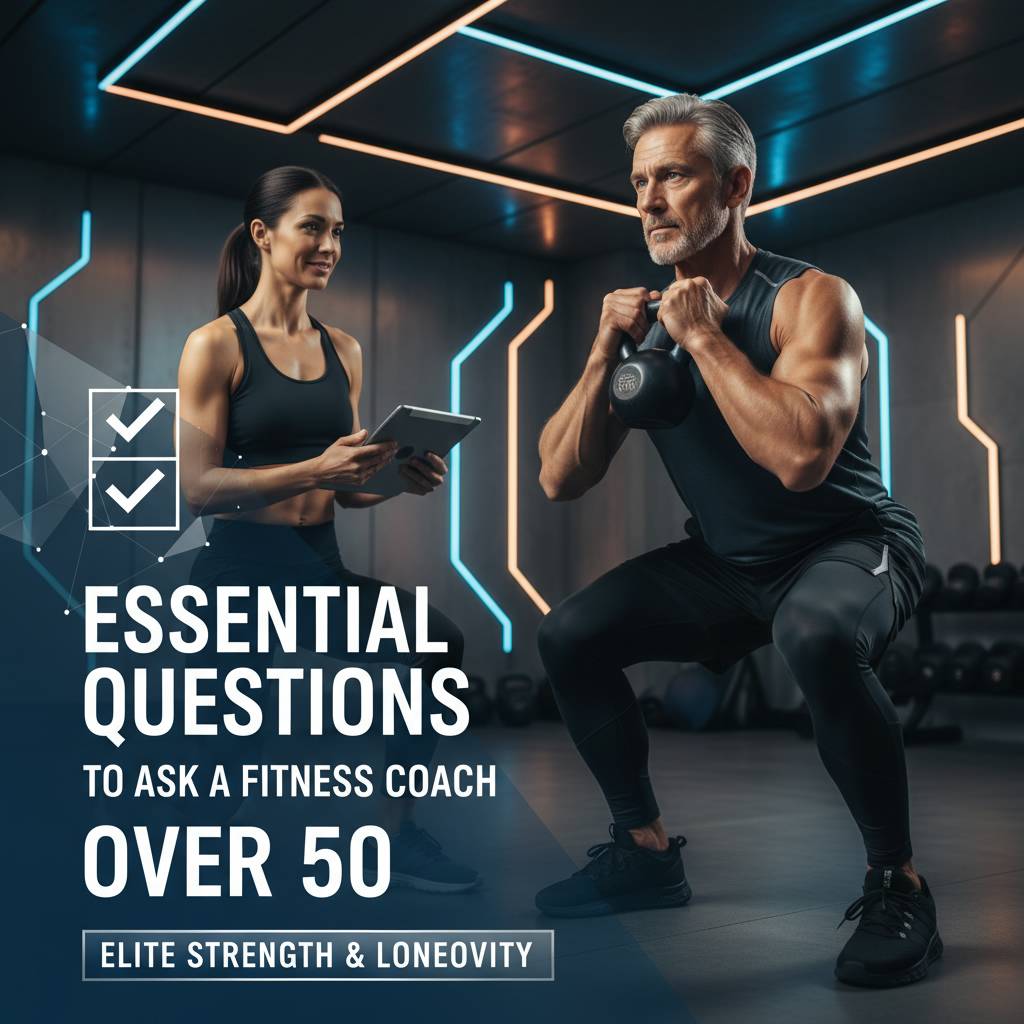
Below is a concise checklist you can use when speaking to prospective coaches. These questions are designed to reveal competence, safety practices, and measurable approaches to progress. Bring this list to a consultation or phone call and keep notes on the answers so you can compare providers objectively.
- What health screenings and baseline tests do you perform and how often are they repeated?
- How do you modify programs for joint issues, osteoporosis, or heart disease?
- Which progress metrics do you track and how will I see them?
- Can you describe your approach to injury prevention and what triggers a referral?
- What credentials or continuing education do you have specific to training older adults?
- How do you tailor recovery and rest for people who typically take longer to recover?
- Do you offer trial sessions or a satisfaction policy and what are your rates and packages?
- How will we communicate between sessions and how are workouts documented?
Use the coach's answers to determine whether they can provide both immediate safety and long-term progress. A strong coach will discuss specific tests, give examples of program adjustments, and show how they measure improvement in functional outcomes-not just cosmetic changes.
Next steps: vetting providers and contacting Mature Male Fitness Coach
After your initial conversations, prioritize coaches who provide clear testing protocols, measurable progress indicators, and a conservative approach to pain and injury. Ask for a short written summary of the proposed plan and the retesting schedule; this shows professionalism and makes it easier to compare coaches. If a coach is vague about testing or progress metrics, look elsewhere-especially when you're over 50 and those details matter more.
If you'd like to discuss these questions with a coach who regularly works with people in midlife, you can reach out to Mature Male Fitness Coach. Their team emphasizes evidence-based testing, individualized programming, and clear progress metrics to keep clients safe and moving toward meaningful goals. To speak with someone directly, call 13466334799 and ask about their assessment and trial session options.
Closing and call to action
Choosing a coach is an important decision that can impact mobility, independence, and how you feel every day. Use this checklist of essential questions to ask a fitness coach over 50 as a guide to ensure safety, measurable progress, and a coaching style that fits your needs. Don't hesitate to ask for specifics-good coaches expect it and plan for it.
When you're ready to take the next step, contact Mature Male Fitness Coach to arrange a detailed assessment and a conversation about your goals. Call 13466334799 to speak with a coach and review the tests, programming, and injury-prevention strategies that matter most for people over 50. Your future self will thank you for choosing a provider who measures what matters.